
Cyanotype, making pictures with sunlight
I have known cyanotype, or blueprint, for much longer than I realised. I did my apprenticeship in a printing shop, where it was used for making tests. In German it is called a Blaupause, and for me it was always something connected with the practical side of printing rather than with art. It is only much later that I started to appreciate what a beautiful and surprisingly simple process it can be.
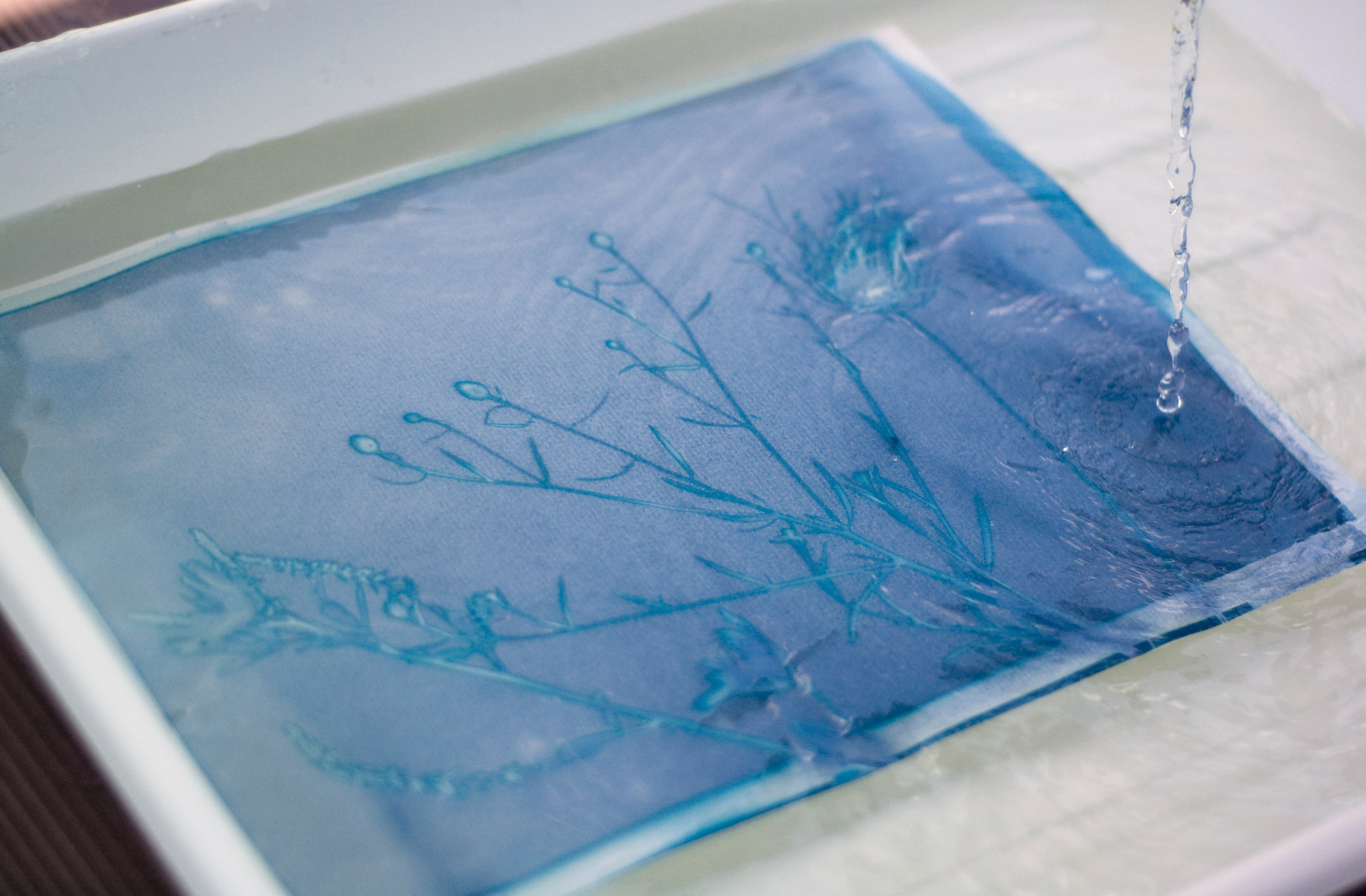
Jodimichelle, CC BY-SA 2.0, via Wikimedia Commons

How cyanotype works
Cyanotype was developed in 1842 by the English scientist and astronomer Sir John Herschel. Paper is coated with light sensitive chemicals and objects are placed directly onto the surface. When exposed to sunlight or another source of ultraviolet light, the uncovered areas turn a deep blue, while the areas protected by the objects remain pale. After washing the paper with water, the image appears. There is something quite satisfying about how direct the process is, you place something onto the paper, expose it to light and let the chemistry do the rest.
From blueprints to Anna Atkins
Although cyanotype became particularly well known for technical drawings and blueprints, it was also used for artistic and scientific purposes from the beginning. One of the most interesting examples is Anna Atkins, an English botanist who used the process to record plants and seaweed. She placed specimens directly onto the treated paper, creating delicate white silhouettes against the characteristic blue background. Her work is often considered the first use of photographic images to illustrate a book, and it shows how closely science, photography and art could overlap.
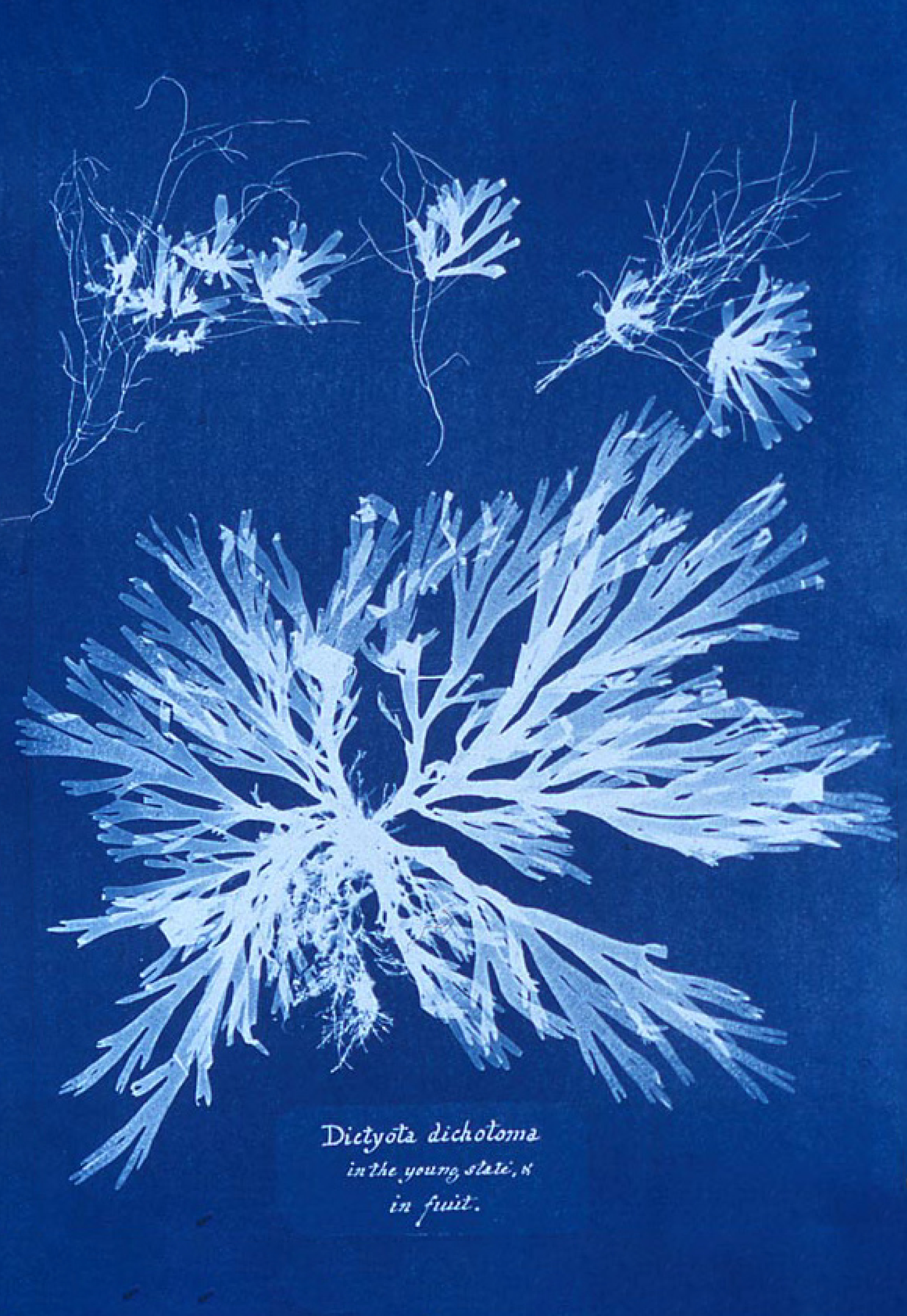
Atkins, Anna, 1799-1871, Public domain, via Wikimedia Commons

Why I find it so appealing
What I like about cyanotype is that it does not need much equipment and yet it leaves plenty of room for experimentation. A leaf, a flower, a piece of lace or almost any interesting object can become an image. The result is not always completely predictable, which I think is part of its charm. Something can be very clearly recognisable, while at the same time looking completely different from the original object. For me, there is also something quite nice about coming back to a process I first knew from the printing shop and seeing it now from a more creative point of view. The technology may be simple, but the possibilities are surprisingly varied.