
Lotte Reiniger, a pioneer with a pair of scissors
I have always found it fascinating when someone creates something that feels completely different from everything around it. Lotte Reiniger was one of those people. Long before animation became the huge industry we know today, she was sitting at a specially built animation table, cutting tiny figures from paper and bringing them to life one frame at a time. Her films are beautiful, but what interests me most is how much thought, patience and imagination went into making them. She was working with very simple materials, yet what she created was anything but simple.
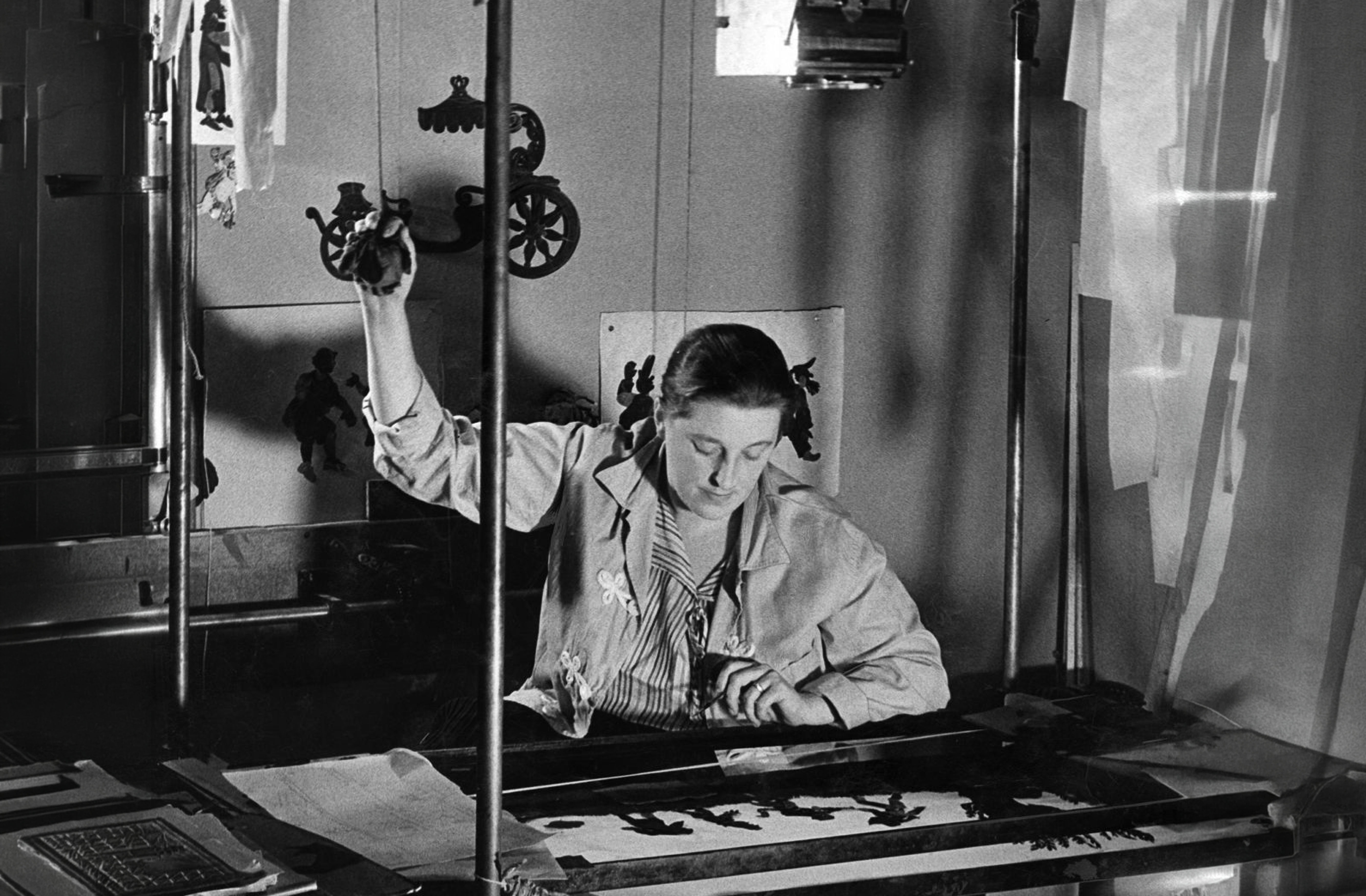
An artist who found her way into film
Lotte Reiniger was born in Berlin in 1899 and became interested in the arts from a very young age. As a child, she built a small shadow theatre and used it to act out scenes from Shakespeare. She was also fascinated by the new medium of film, which at the time was still something very young and experimental. At the age of fifteen, she heard the actor and filmmaker Paul Wegener speak about the possibilities of trick film. It had a lasting effect on her. She wanted to be part of this new world of cinema and eventually found her way into Wegener's circle. She started by making silhouette designs of actors and their characteristic gestures. This led to her first film work, including the creation of silhouette intertitles for Wegener's The Pied Piper of Hamelin in 1918. It was an unusual route into filmmaking, but it suited her perfectly. She already understood movement, performance and character from her interest in theatre.
Making movement from paper
Reiniger's technique was based on silhouettes, with figures cut from black paper and moved in front of a light source. The individual movements were then photographed frame by frame. That sounds relatively straightforward until you consider how much work was involved. A second of animation could require 24 individual images. For The Adventures of Prince Achmed, around 250,000 individual frames were photographed, with about 100,000 eventually used in the finished film. Reiniger cut her figures largely by hand and developed an extraordinary level of control with scissors. She could create people, animals, flowers and fantastic creatures directly from her imagination. As she once put it, her hands had been using scissors for so long that they knew what to do by themselves. I think that is one of the things that makes her work so interesting. There is a very handmade quality to it, but at the same time the movement is incredibly precise.
The adventures of Prince Achmed
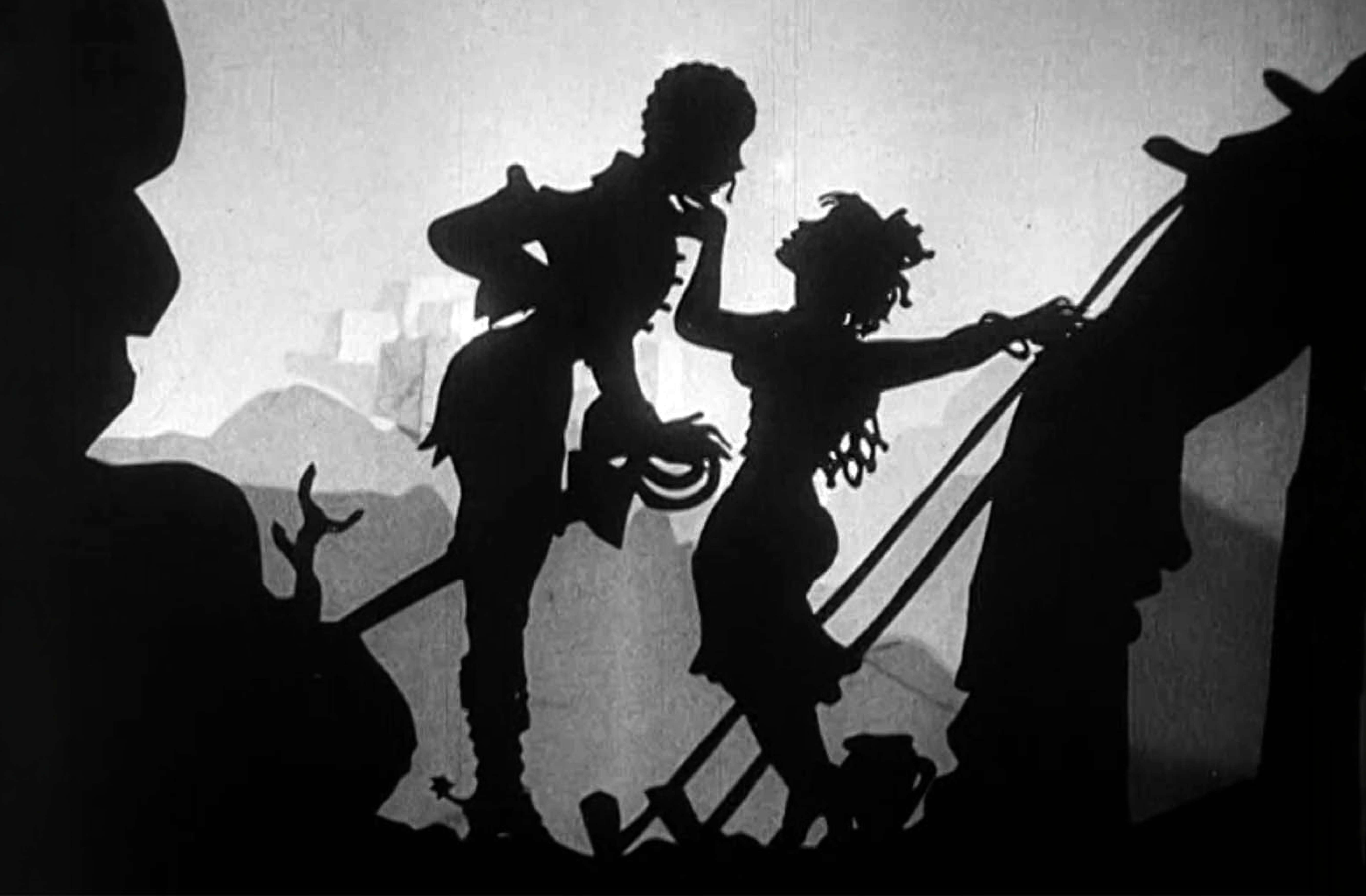
Between 1923 and 1926, Reiniger worked on what became her best known film, The Adventures of Prince Achmed. It is generally regarded as the first surviving feature length animated film. The story draws on tales from One Thousand and One Nights and follows Prince Achmed through a world of flying horses, magic, demons, witches and enchanted islands. The figures are mostly seen as dark silhouettes, while coloured backgrounds create the atmosphere behind them. Reiniger worked closely with her husband Carl Koch, who was responsible for the technical side and the filming. Other artists also contributed, including Walther Ruttmann and Berthold Bartosch. It was a collaborative project, but Reiniger's vision is unmistakable. The film was first shown in Berlin in May 1926. It was also shown in Paris that year before eventually reaching cinemas in Berlin. Watching it today, it is easy to forget just how new and unusual this must have looked at the time.
Theatre was always part of her films
Reiniger never really left the theatre behind. Her films have a strong sense of staging, almost as though each scene were taking place on a small stage. That makes sense when you know where she came from. She had grown up fascinated by actors, Shakespeare and shadow theatre, and later worked on theatrical productions in Berlin. Her understanding of movement was not simply technical. She knew how a character could enter a scene, how a gesture could tell a story and how a sequence could build towards something. Her choice of subjects also reflects this background. Fairy tales, myths, opera and music appear again and again in her work. Mozart was a particular passion of hers, and she created films based on Carmen, The Magic Flute and other musical subjects.
A life shaped by change
Reiniger's career was also affected by the political upheavals of the twentieth century. In 1935, after the Nazis came to power, she left Germany with Carl Koch and settled in London. She later worked in Paris and Rome before returning to London permanently after the war. It is striking how much she continued to work despite all these changes. She made short films, worked with theatres and continued developing her silhouette technique. From the 1950s onwards, she produced a series of short fairy tale films, including Snow White and Rose Red, The Frog Prince, Sleeping Beauty and Hansel and Gretel. Her work did not simply belong to one period of film history. She kept returning to the same basic materials and finding new ways of using them.
Simple materials, endless possibilities
What I like about Reiniger's work is that there is no sense that she needed complicated technology to make something remarkable. Paper, scissors, light and a camera were enough. Of course, the process was technically demanding, but the materials themselves were very ordinary. That makes the results feel even more impressive. A tiny piece of cut paper could become a dancer, a bird, a monster or a prince. With the right movement and timing, a flat silhouette suddenly had personality. There is also a gentle sense of humour in her films. Her fairy tales can be magical and beautiful, but they are rarely overly sentimental. There is always something slightly playful going on in the details.
Why Lotte Reiniger still matters
For a long time, Reiniger's work was surprisingly little known, particularly in Germany. She received greater recognition later in life and continued travelling, giving talks and workshops and introducing new generations to her work. The Adventures of Prince Achmed has since been carefully restored, allowing audiences today to experience a film that might otherwise have been lost. Reiniger herself continued making films well into her later years, with The Rose and the Ring in 1979 being her final major colour silhouette film. She died in 1981, but her particular way of working remains remarkably distinctive. There are plenty of animators who have followed, but very few have created exactly the same combination of delicate silhouettes, theatrical movement, fairy tales and understated humour.
A different kind of film pioneer
When we talk about pioneers of animation, it is easy to think first of large studios and increasingly sophisticated technology. Lotte Reiniger offers a very different story. She built her own tools, developed her own technique and spent years patiently turning pieces of paper into moving images. She did not need to make her work louder or more complicated to make it memorable. That is probably what I find most appealing about her. There is something very direct about the way she worked. She had an idea in her head, picked up a pair of scissors and started making it. Almost a century later, those little figures can still move across the screen and make us stop and watch.