
Sand animation, creating movement from sand
Sand animation is one of those techniques that I find particularly fascinating because it is so simple in principle, but can produce remarkably beautiful results. I first came across it as part of the early history of animation, and it also connects nicely with Lotte Reiniger and her experiments with silhouettes. Instead of drawing on paper or using a series of prepared figures, the artist works directly with sand, changing the image a little at a time and photographing each change. The result can be a film, or it can be performed live, with the artist creating and changing the images in front of an audience.
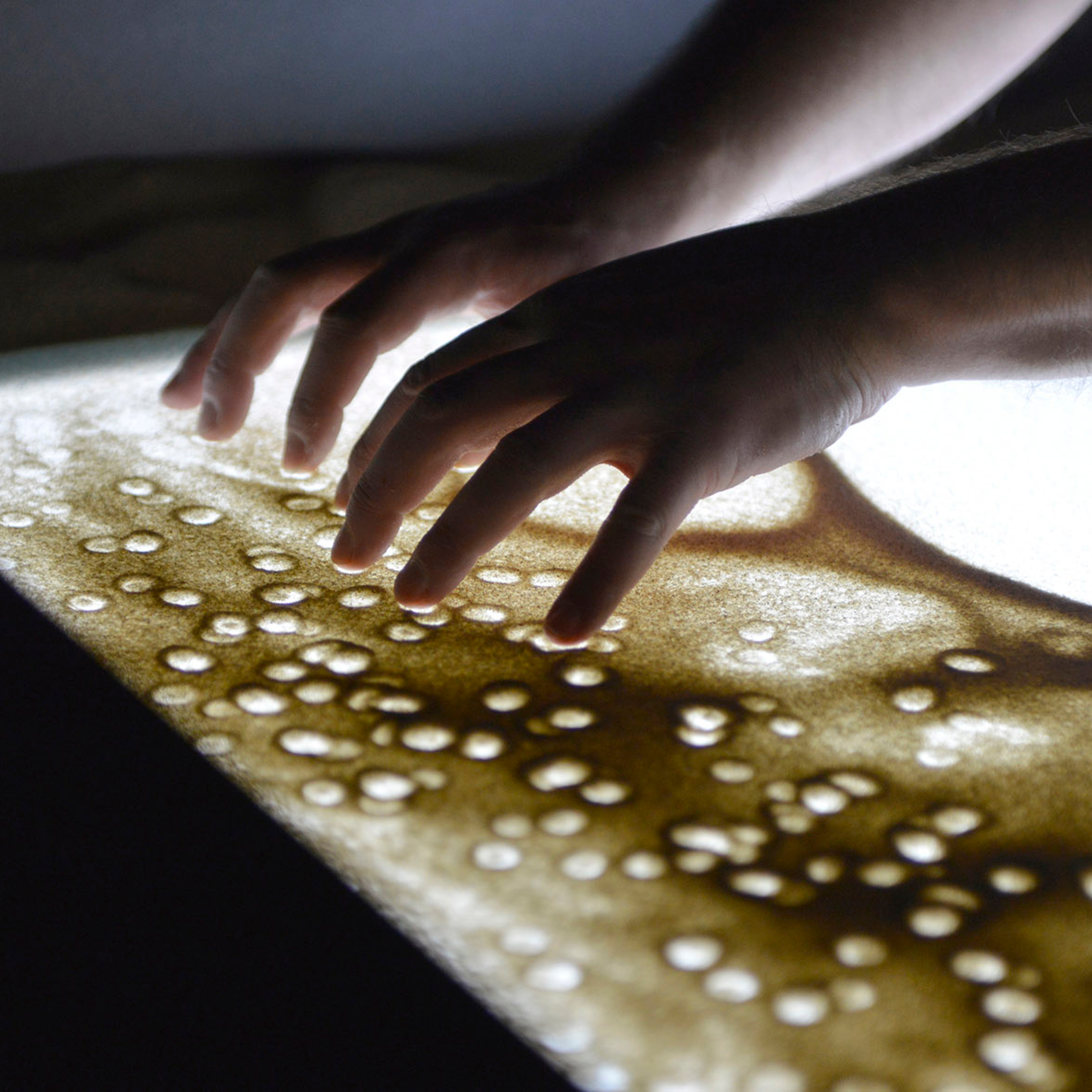
Cassimomusic2, CC BY-SA 4.0, via Wikimedia Commons

An early connection to Lotte Reiniger
Sand animation is a form of stop motion, but its history goes back further than the technique itself. Sand art has been practised for centuries by different cultures, including Navajo, Aboriginal Australian and Tibetan traditions, as well as the Japanese art of Bonseki. These were forms of still imagery rather than animation, but they show that using sand to create pictures is certainly not a new idea. One of the earliest documented uses of sand in animation can be found in Lotte Reiniger's The Adventures of Prince Achmed. While Reiniger created her famous silhouette figures, the animator Walter Ruttmann worked with sand and wax beneath the cut outs to create some of the film's magical effects. I like this connection because it shows that artists were already experimenting with different materials to create movement at a time when animation itself was still developing.
Working with light and sand
The basic idea is beautifully straightforward. Sand is placed on a glass surface with a light underneath or behind it, often using a lightbox or a similar setup. The artist moves the sand with their hands, building up shapes or removing it to reveal more light. Thicker areas appear darker, while thinner areas allow more light through, so the artist is effectively drawing with light and shadow. For animation, each small change is photographed as a separate frame. Played back in sequence, these individual changes become movement. The sand can also be made more or less dense to create things such as smoke, clouds and other soft textures.
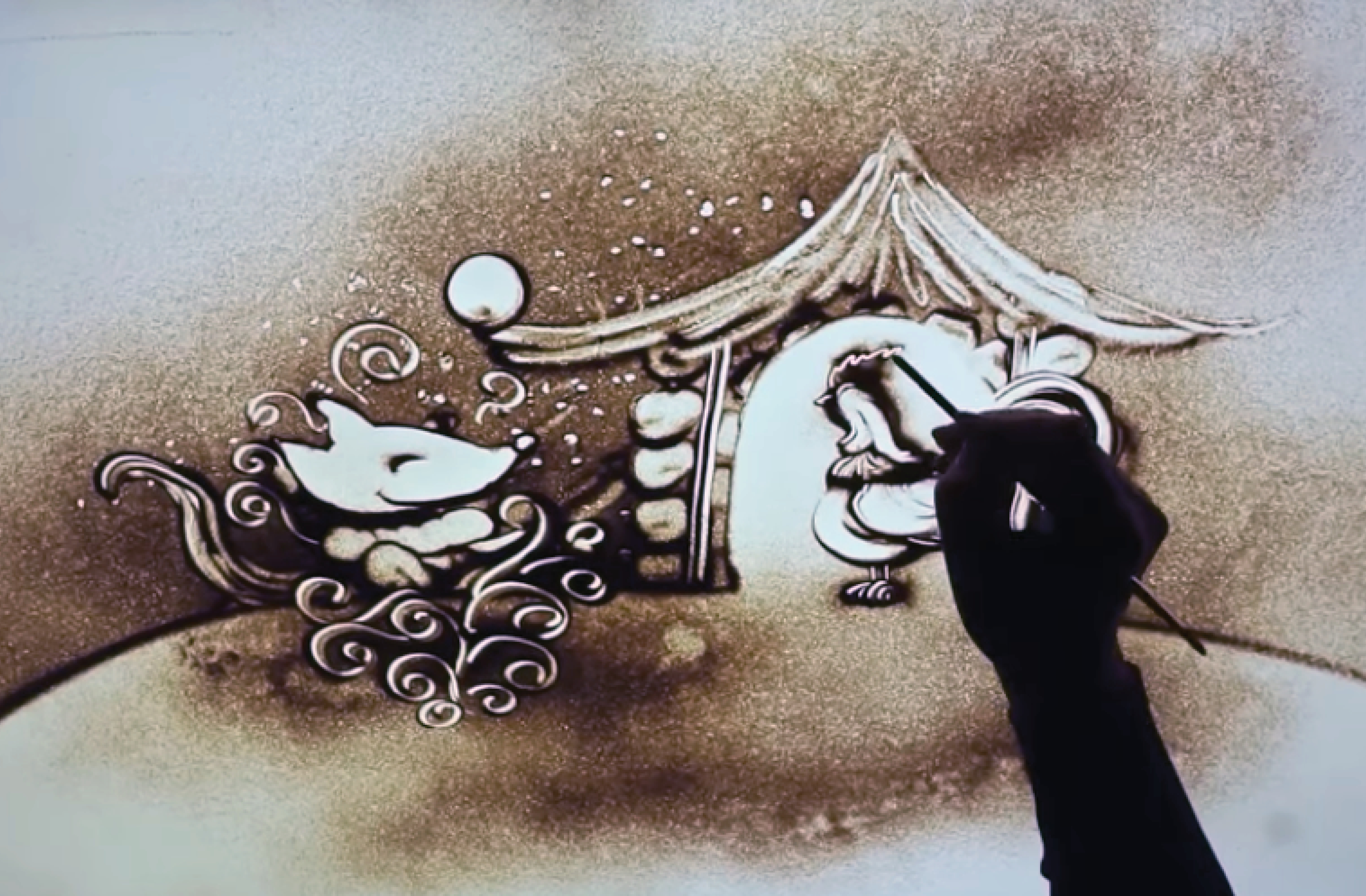
A Ukrainian film, Кіт та півнек (Cat and Rooster), created by recording a live performance of sand being manipulated on glass.
The technique develops
Sand became a main material for animation particularly during the 1960s. Swiss animators Gisèle and Nag Ansorge experimented with ground and dyed quartz sand before making it the central material of their films. Around the same time, American animator Caroline Leaf began working with sand as an art student at Harvard. Her first sand film, Sand, or Peter and the Wolf, was made in 1968, using beach sand on a lightbox and manipulating it frame by frame to create figures, textures and movement. Other animators continued to explore the possibilities of the technique, including Eli Noyes and Co Hoedeman, whose 1977 film The Sand Castle won the Academy Award for Best Animated Short Film.
From animation to live performance
What I find particularly interesting is that sand animation does not have to be made frame by frame for a finished film. It can also be performed live. The artist creates an image with their hands while it is projected onto a screen, then changes it in front of the audience, allowing one image to flow into another. This has become particularly popular as a performance art, especially in Ukraine, where artists such as Kseniya Simonova helped bring the technique to a much wider audience from the late 2000s onwards. For me, that live element is what makes sand animation so special. You are not just watching the finished animation, you are watching the artist create and destroy the image at the same time, with nothing more than sand, light and their hands.